
.svg)
microphones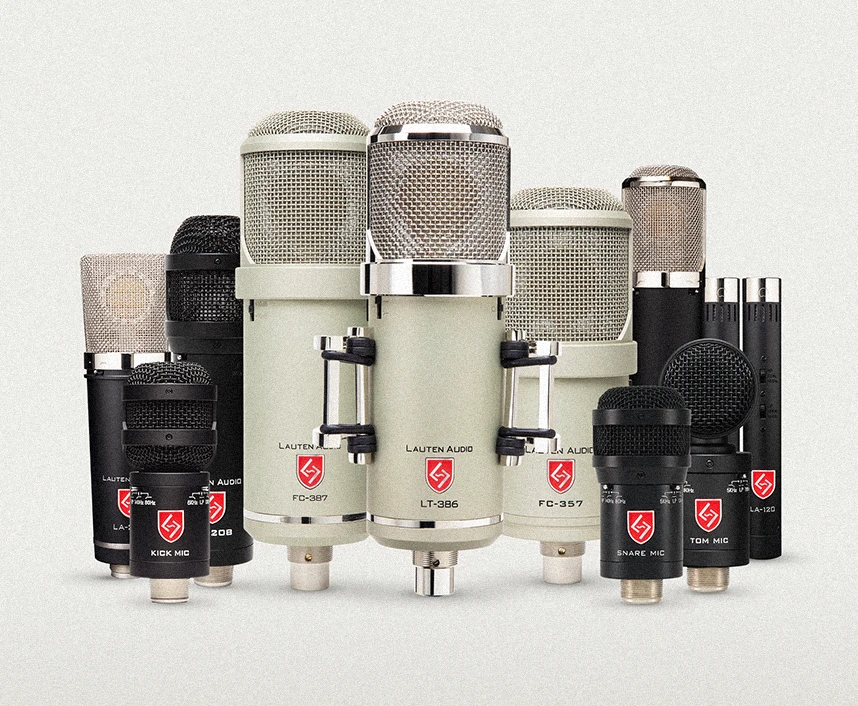
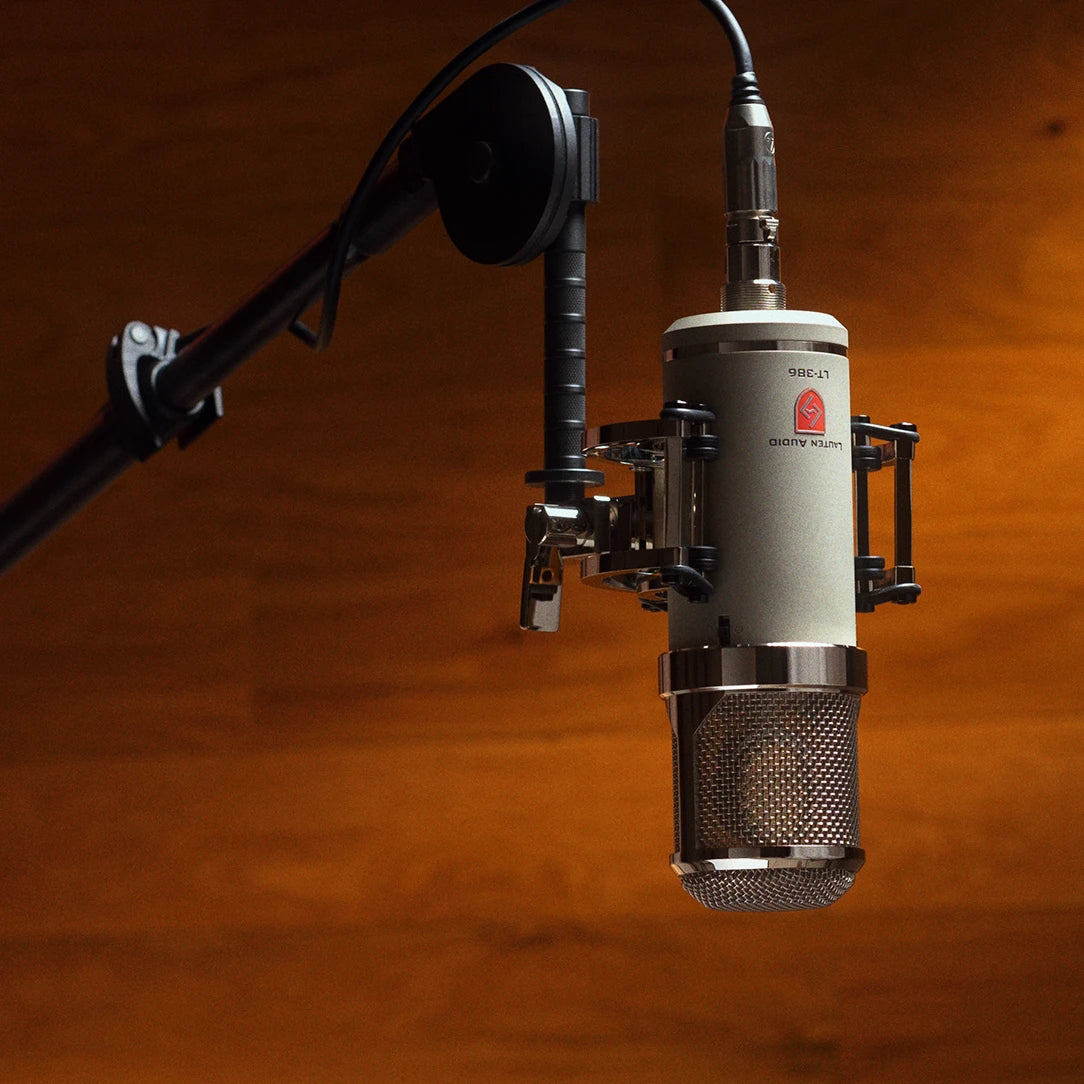

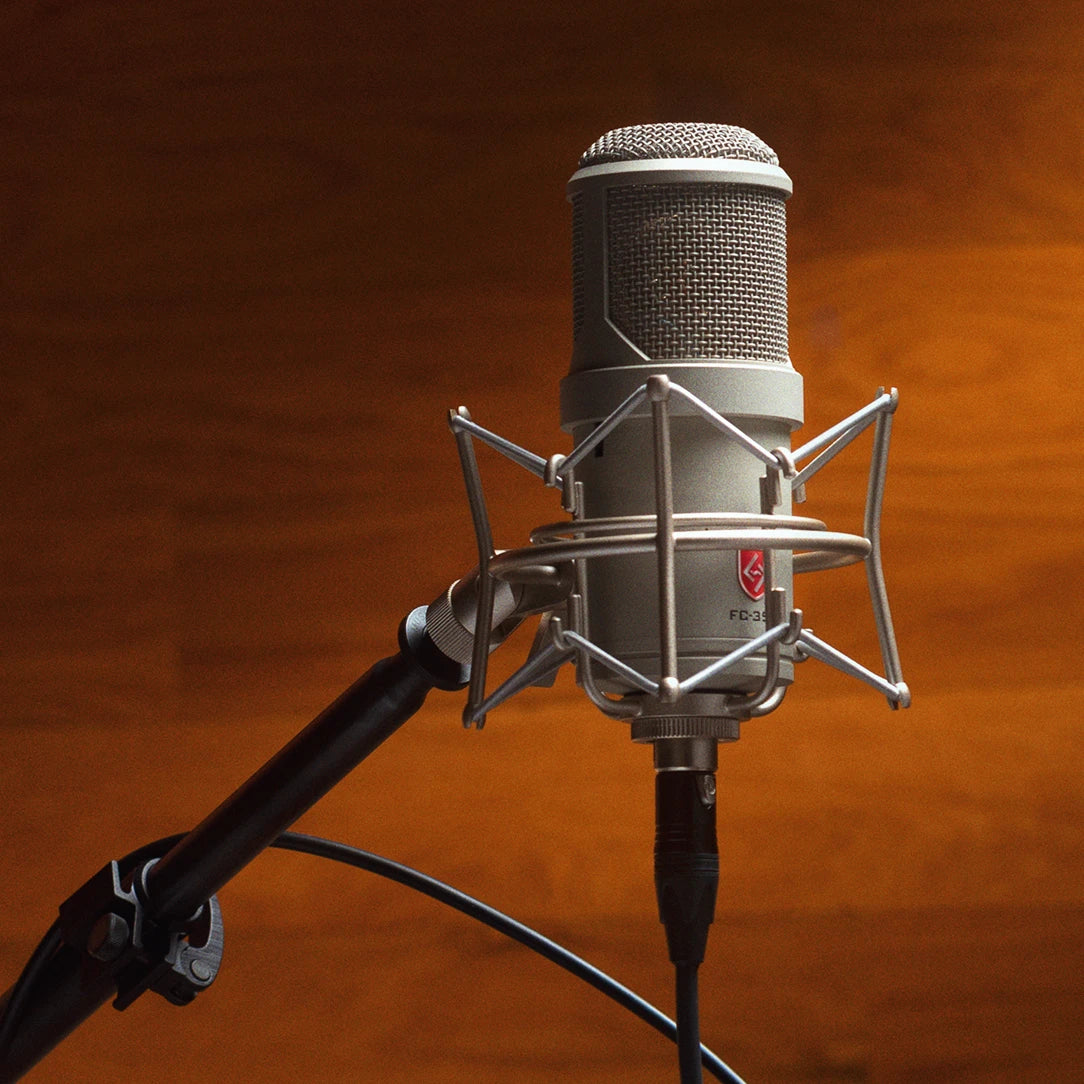

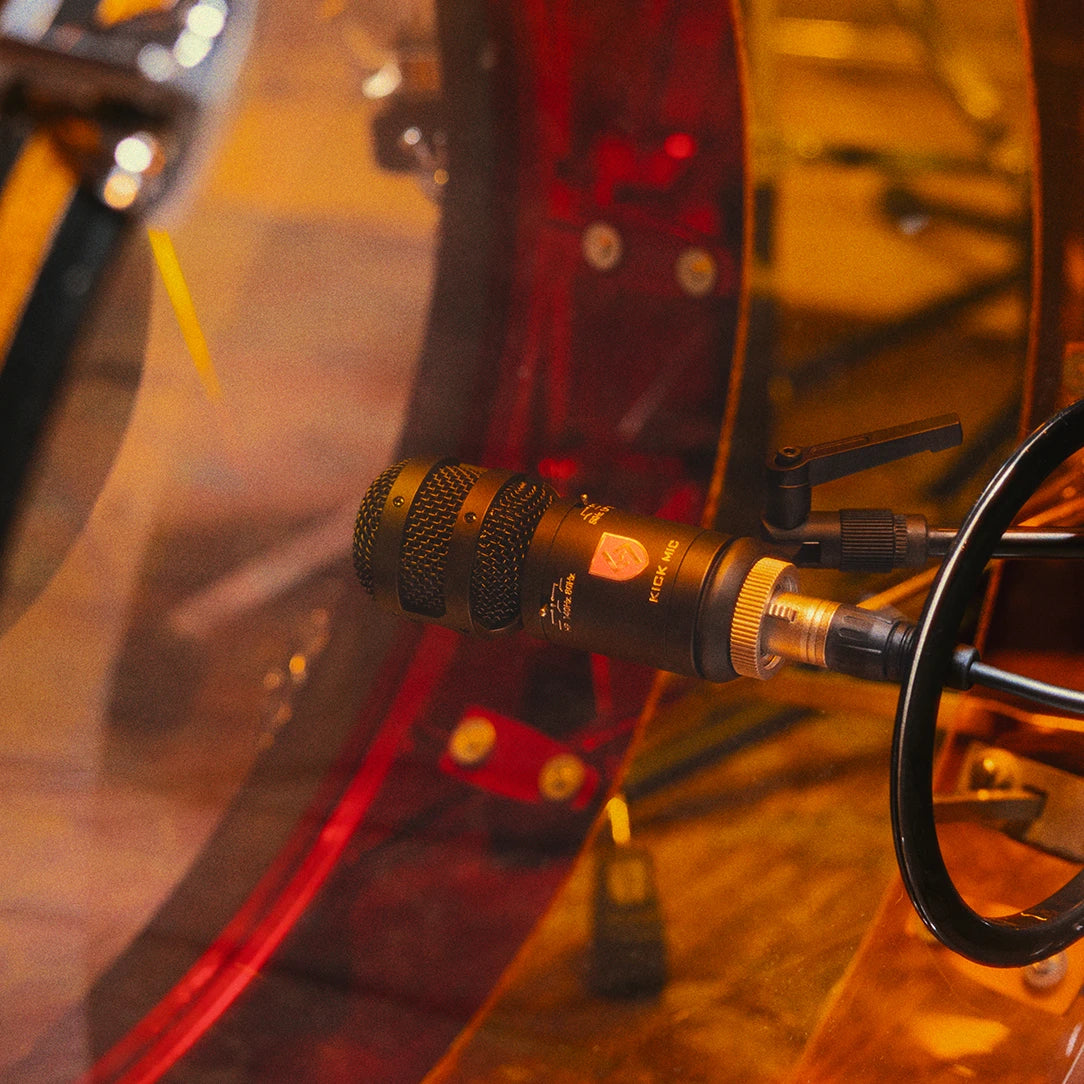


Every Lauten has a purpose.

about
We are Lauten Audio.
support
Always here for you.
Assuming you have Kick Mic placed fully in the bass drum, this would indicate a tuning issue or a need for more dampening inside the drum. This issue is not exclusive to Kick Mic, but may be more apparent because of Kick Mic’s sonic clarity.
When a kick beater bounces off the batter head and hits it again, Kick Mic will capture it. Kick Mic is highly detailed, making the nuances of a player’s technique more audible. The flam can be addressed by improving technique or minimized by using a slightly softer beater.
It is likely that Kick Mic is not placed far enough inside your bass drum, or your front head needs to be tuned.
The LS-208 is a condenser microphone and will not work with active or in-line signal boosters, as these boosters are designed for dynamic microphones and block phantom power from reaching the microphone.
No. The 5-pin cable included with the LA-320 is designed specifically for the LA-320’s high-voltage needs. Most 5-pin cables sold online, even those advertised for use with tube microphones, are low-voltage cables intended for lighting applications. Using one of these cables can damage your LA-320.
Yes, you can. Each tube has its own character and can have a subtle or significant impact on the sound and performance of a microphone. Only ECC83 tubes should be used in the LA-320. Using other tube models may damage the LA-320 or its tube socket.
Yes, absolutely!
Yes, absolutely!
Yes, absolutely!
Components critical to the sound of the Oceanus LT-381 are no longer readily available. These are not components that regularly fail, but they do make production difficult to maintain. This does not impact our ability to service the Oceanus LT-381.
Rim Mount's max load capacity is 3.3 LBS. Some microphones that we have mounted successfully with Rim Mount (other than Snare Mic & Tom Mic) are SM7b, MD421, RE20, SM57, and 414.
No, they are only sold in pairs.
The output of the LA-120s is extremely high. The first thing to do is ensure you are properly gain-staging the microphones as too much gain at the preamp is the most common cause. Another issue can be the noise floor of the room you are recording in, which is caused by things like air conditioning. Utilizing the high cut can help to minimize this noise, but the best way to reduce room noise is to eliminate the cause.
Please watch our video HERE.
Absolutely! They sound great.
Absolutely! They sound great.
Please watch our video HERE.
Please watch our short video HERE.
Buzzing is usually power related and not the fault of the microphone. Here are some things to try:
1. Do you have lights on a dimmer? Turn them off. This is the number one cause of electric noise.
2. Make sure the microphone is plugged into the same outlet as the computer and audio interface.
3. Try a 3 pring to 2 prong power adapter. If the sound goes away, it's a grounding issue with your power.
Please ensure you are using an OEM 5-pin tube microphone cable from the LA320 to the power supply. Do not use a 5-pin microphone cable (DMX or Midi) commonly found on Amazon.com, these won't work.
This is most likely because the power supply is set to 220V and should be set to 115V. Simply remove the clear plastic cover from the voltage selection switch and set to 115V.
Please ensure you are using an OEM 5-pin tube microphone cable from the LA320 to the power supply. Do not use a 5-pin microphone cable (DMX or Midi) commonly found on Amazon.com, these won't work.
The LS208 has exceptional off-axis rejection, but no where near that of the LS-308.
It's completely normal. The 208 can handle up to 135dB without a pad. A slightly lower output from the microphone is a side effect of that, but no assistive device aside from a preamp is needed to increase gain.
Physics! We are using a completely unique design that allows us to reject off-axis sounds. A side effect of that is a warmer top-end. Not to worry though, the 308 takes EQ exceptionally well!
Please watch our video HERE.
It's time to change them! Shock bands wear out over time from the weight of a microphone. Click HERE to buy a new set.
STOP IMMEDIATELY! The capsule of a microphone is electrically charged and thinner than a human hair. Intentionally blowing or breathing closely on the capsule can cause moisture to build, similar to fogging up a window. If you are singing close enough for this to occur, use a pop filter.
1. Was your Atlantis FC-387 being used to record vocals? If yes, were you using a pop filter? If no, you may have gotten moisture on the capsule. Try letting it "dry" out for 24-hours. If this solves your issue, be sure to use a pop filter moving forward.
2. Is your environment humidity controlled? The Atlantis FC-387 capsule is extremely large and thinner than a human hair, which makes it sensitive to humidity, moisture, and dust. It should be kept at or below 50% humidity at all times.
Please watch our video HERE.
It's time to change them! Shock bands wear out over time from the weight of a microphone. Click HERE to buy a new set.
This is normal. We chose to minimize components in the Multi-Voicing selector circuit to protect the timbre of the microphone.
Please watch our video HERE.
Please watch our video HERE.
We use Flitz Metal, Plastic & Fiberglass polish. It comes in a small grey tube, and you can get it just about anywhere. Follow the instructions carefully. Please watch our video HERE.
STOP IMMEDIATELY! The capsule of a microphone is electrically charged and thinner than a human hair. Intentionally blowing or breathing closely on the capsule can cause moisture to build, similar to fogging up a window. If you are singing close enough for this to occur, use a pop filter.
Please watch our video HERE.
Buzzing is usually power-related and not the fault of the microphone. Here are some things to try:
1. Do you have lights on a dimmer? Turn them off. This is the number one cause of electric noise.
2. Make sure the microphone is plugged into the same outlet as the computer and audio interface.
3. Try a 3-prong to 2-prong power adapter. If the sound goes away, it's a grounding issue with your power.
1. Was your Eden being used to record vocals? If yes, were you using a pop filter? If not, you may have picked up moisture on the capsule. Try letting it "dry" out for 24 hours. If this resolves your issue, please use a pop filter going forward.
2. Is your environment humidity-controlled? The Eden capsule is extremely large and thinner than a human hair, which makes it sensitive to humidity, moisture, and dust. It should be kept at or below 50% humidity at all times.
3. Is the noise always there, regardless? Your Eden likely needs a new tube, which is easy to replace! Click HERE to buy a new one.


.svg)

.svg)